How to Train Like a Persona Character: A Real‑Life JRPG Workout Program

Hey ladies and gents!
We’ve had a huge wave of new members join the Action Hero Athletics community over the last couple of weeks, and I couldn’t be more excited to welcome you all. If you’re new here — welcome aboard!
And if I had to share one fun fact about myself, it’s this: I’m a massive gamer.
Specifically RPGs. More specifically… the Persona series.
We’ve already covered several workouts inspired by some of our favorite characters — you can check those out here:
And trust me, there are plenty more coming to the Video Game Workout Series.
But today, I want to dive into something I’ve been wanting to cover for a long time — something that will eventually evolve into a full series of its own:
Can you actually train like a Persona main character?
And the answer is: yes, you absolutely can.
There’s a concept in the games that I love so much because it translates perfectly into real‑world fitness: Social Stats.
In Persona, you level up these stats by taking action — sometimes directly, sometimes passively — but always consistently. And that’s exactly how fitness works. You build your “stats” by showing up, stacking habits, and leveling your body over time.
So in this article, we’re going to take the Persona social stat system and apply it to your training. By the end, you’ll have a full blueprint for becoming the most well‑rounded, athletic version of yourself — your own JRPG protagonist.
Your Fitness Stat Sheet
In the games, you have a variety of tasks, social links, and activities that help you level up your stats.
Here is an example of what a social stat sheet looks like in the games:
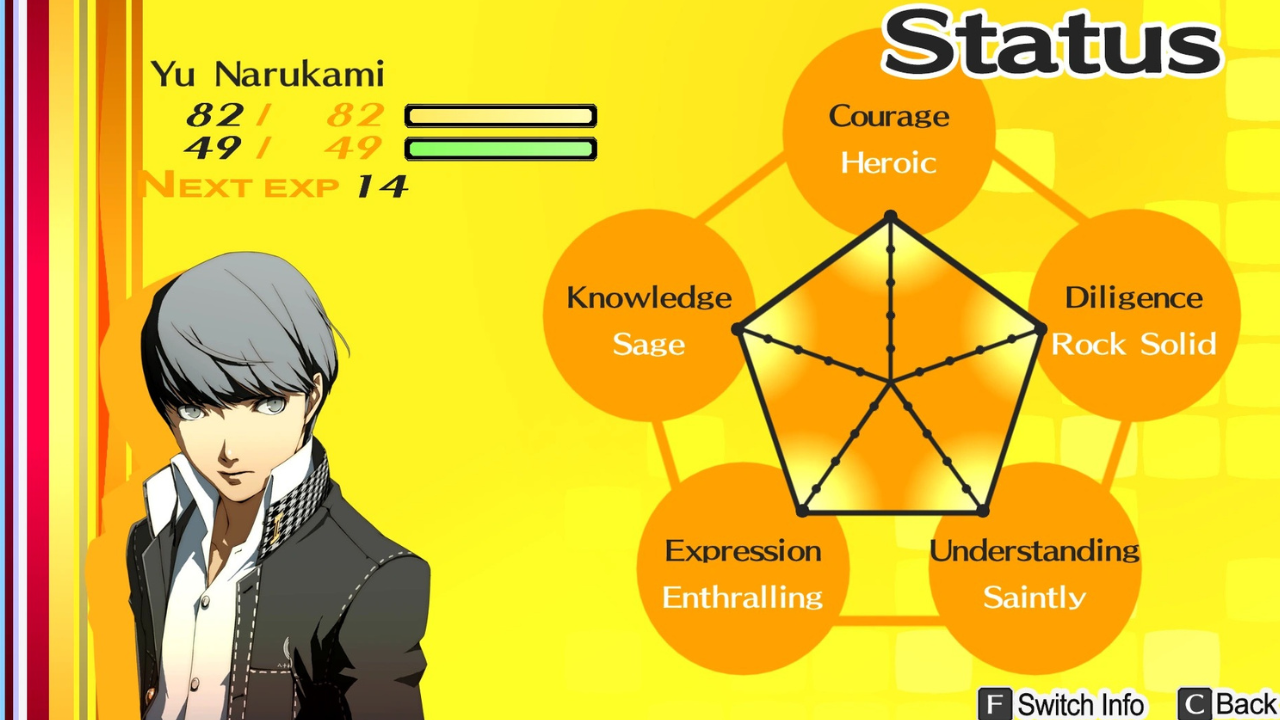
Fitness works the same way — just with different “links” and different daily actions.
This is what your personal fitness stat sheet will look like!
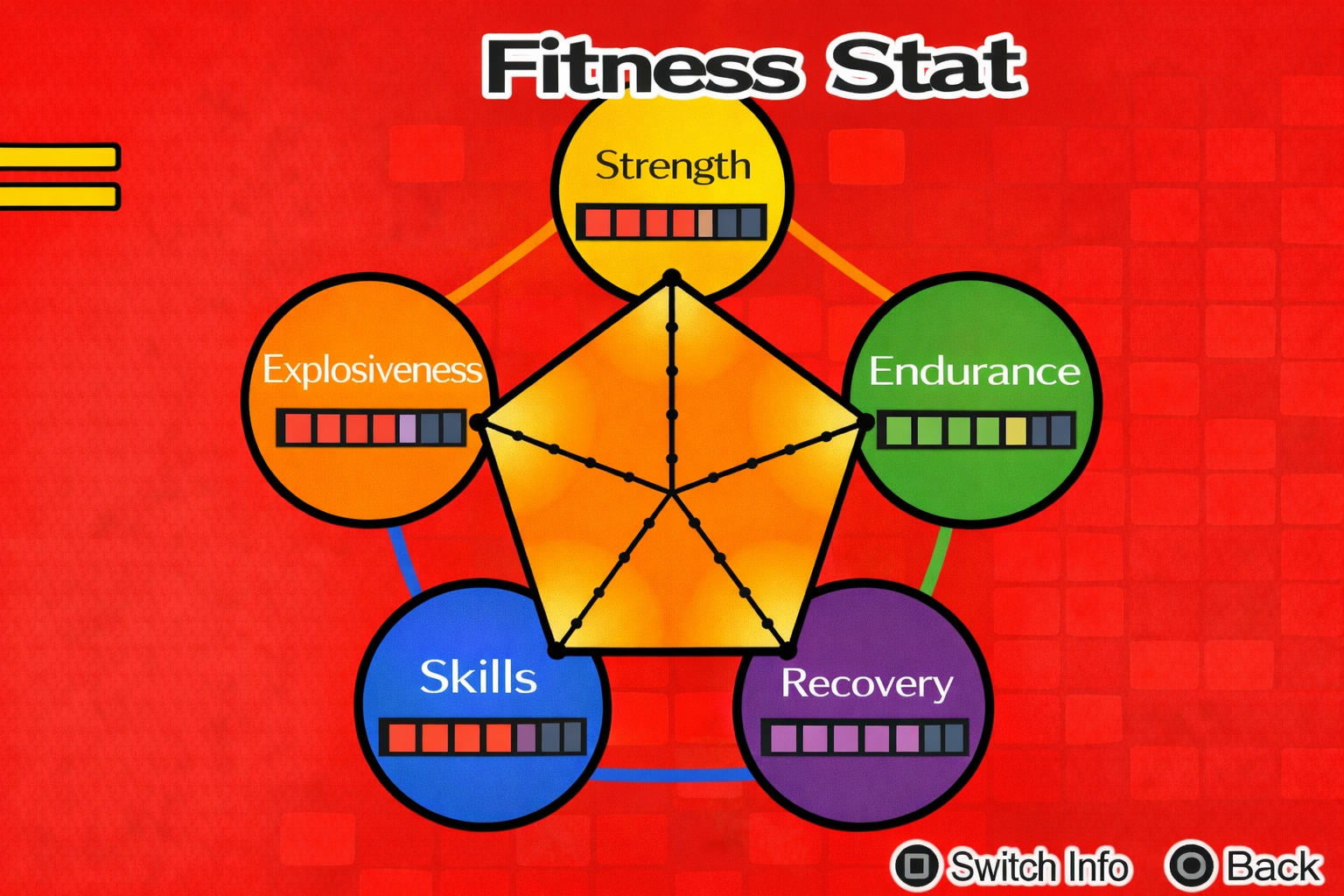
Here’s how to apply the Persona stat system to your real‑life training and start leveling up like the main character of your own story.

Strength
Strength is the first fitness stat we’re covering. It’s the simplest to build, the easiest to measure, and the foundation for every other stat in this system.
Start with basic training 4 days a week
If you’re a beginner, structure is everything. This is the #1 thing I tell new clients who are just starting their fitness journey:
Without structure, you won’t achieve anything meaningful.
Your first goal is to build a robust foundation — something that strengthens your muscles, conditions your joints, and reduces your risk of injury. That foundation gives you room to grow into more advanced training later.
Start with four full‑body workouts per week. It’s simple, effective, and helps you learn your body faster. And let’s be honest — who doesn’t want faster progress?
Next: progressively overload your movements
Since we’re calisthenics‑based, progressive overload looks a little different than traditional weightlifting.
You’ll focus on:
Increasing reps
Switching to harder variations
Adding resistance bands or weighted vests
Improving form and range of motion
Strength is all about leveling up your ability to produce force. So here’s how your Strength Stat levels break down:
Level 1: Untrained – Your foundation is underdeveloped. You’re learning basic movement patterns and building baseline muscle.
Level 2: Capable – You have real‑world usable strength. You can handle your bodyweight and external load.
Level 3: Powerful – You stand out. Pushups and pull-ups feel natural, and you can rep them out consistently.
Level 4: Elite – You’re loading movements and breaking your limiter. Progress feels unstoppable.
Level 5: Titan – Total body dominance. Your physique reflects your mastery.

Endurance
Endurance isn’t just “cardio.” It’s durability — your ability to keep going, stay composed, and maintain output under fatigue.
This can be tested through:
High‑rep sets
Long runs
Extended circuits
Sustained activity under stress
Start using a jump rope
The jump rope is one of the best tools you can pair with calisthenics. It’s portable, affordable, and incredibly effective.
Start with:
5 sets of 1 minute
Build up to 10 sets of 1 minute
Then reset to 5 sets of 2 minutes
This progression builds endurance without frying your joints.
If you’re a total beginner…
Start with walking. Once you reach Strength Level 3, you can begin implementing jump rope training.
Here’s your Endurance Stat progression:
Level 1: Fragile – Fatigue hits fast. Recovery is slow.
Level 2: Steady – You can maintain moderate effort. Longer workouts are manageable.
Level 3: Relentless – High workloads feel sustainable.
Level 4: Ironclad – Exceptional stamina under intense stress.
Level 5: Limitless – Near‑superhuman endurance with minimal drop‑off.

Explosiveness
Explosiveness is your athletic stat — the one that makes you fast, sharp, and powerful.
My background before fitness was soccer and boxing, and let me tell you: Being quick was non‑negotiable.
To build explosiveness, you need exercises that target fast‑twitch muscle fibers:
Pushups → Clapping pushups
Jogging → Sprints
Squats → Explosive squats
But here’s the catch:
You must reach Strength Level 2 before training explosiveness.
Your muscles and tendons need a foundation before you start adding high‑impact movements.
Explosiveness Stat progression:
Level 1: Dormant – Power output is slow and undeveloped.
Level 2: Reactive – You can produce short bursts of speed.
Level 3: Dynamic – Strong, fast force with sharp movement.
Level 4: Explosive – Elite speed and power.
Level 5: Detonating – Maximum human acceleration and force.

Skills
This is the stat everyone wants from day one — the flashy calisthenics moves:
Muscle‑ups
Handstands
Pistol squats
Levers
And more
But here’s the truth:
You need Strength Level 3 and Explosiveness Level 3 before skills become realistic.
Most people try to jump straight into skills and get frustrated when progress stalls. Skills require:
Strength
Coordination
Body control
Explosive ability
Patience
Once your foundation is solid, skills come much easier.
Skill Stat progression:
Level 1: Novice – Movements feel unfamiliar.
Level 2: Practiced – Execution becomes more reliable.
Level 3: Trained – Confident, intentional movement.
Level 4: Masterful – Precision and efficiency.
Level 5: Virtuoso – Complete physical mastery.

Recovery
We saved the most important (and yes, the least glamorous) stat for last.
Recovery is the difference between:
Progress vs. burnout
Growth vs. stagnation
Longevity vs. injury
There are two main forms of recovery:
Active Recovery
If you don’t want to stop moving, you don’t have to. Light movement actually speeds up recovery.
Great options include:
Walking
Cycling
Swimming
Yoga
Playing a sport with friends (bonus: social link boost!)
Complete Rest
This one’s for the hobbyists — the chronic gamers. I’m right there with you.
Sometimes your body just needs to chill.
If you’re taking a full rest day:
Pick up a hobby
Game for hours
Do a stretch routine
Hydrate
Eat well
Sleep 6–7+ hours
Recovery Stat progression:
Level 1: Drained – Slow recovery, lingering soreness.
Level 2: Resting – Normal recovery pace.
Level 3: Restored – Reliable bounce‑back.
Level 4: Regenerating – Quick recovery even from intense training.
Level 5: Reborn – Peak recovery ability.
Become the Main Character of Your Own Persona Universe
Why train like a Persona character when you can be the protagonist of your own story?
The social stat system is one of my favorite concepts in gaming, and applying it to fitness makes training more fun, more structured, and more meaningful.
So now I have to ask:
Where are you currently in your fitness journey? Drop your stat levels in the comments — I’d love to see where everyone is starting.
And until then, don’t forget to check out our workout programs inspired by your favorite video game, anime, and superhero characters.
Stay super — and I’ll see you in the next one.